
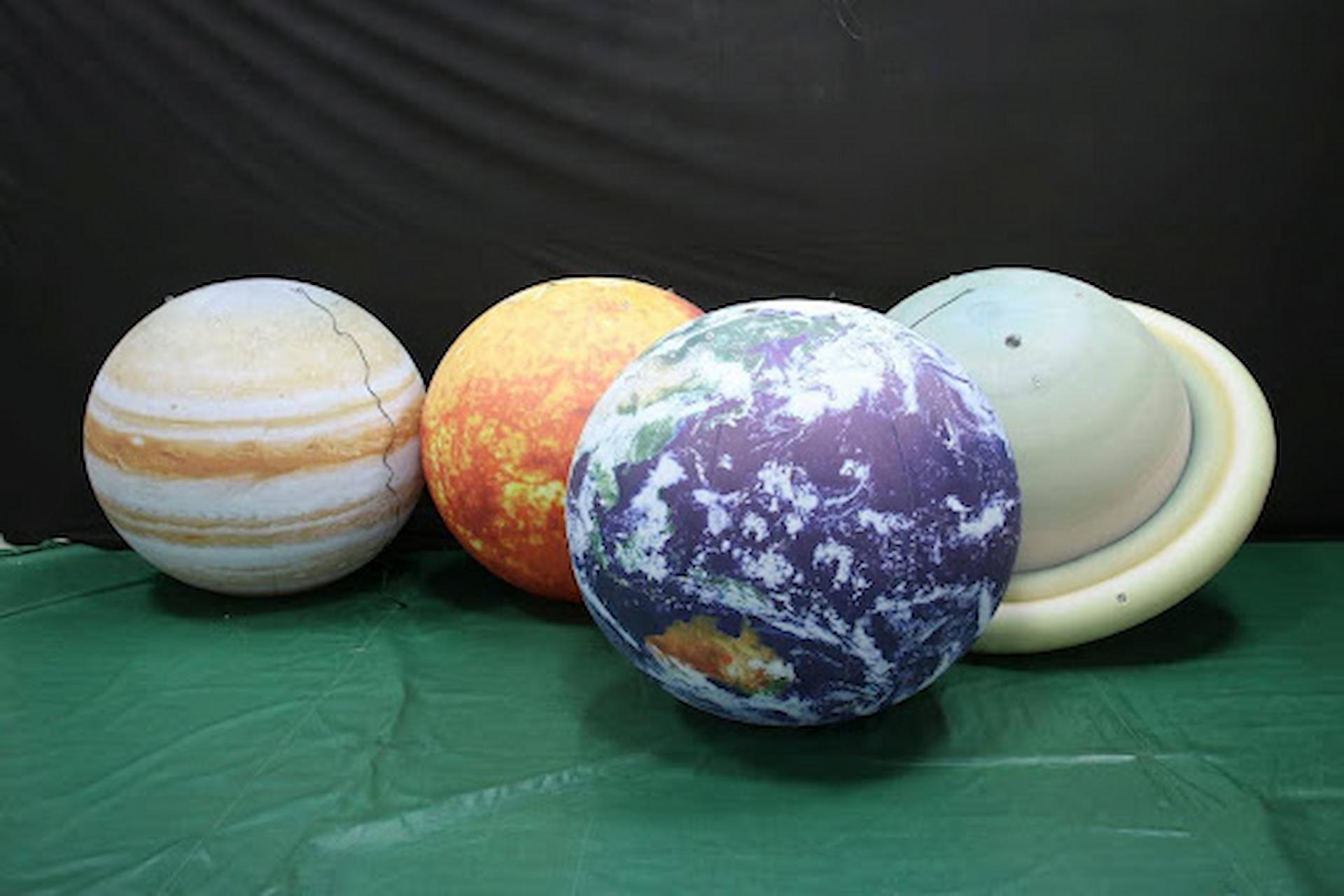

Inflatable planets are transforming the way science exhibitions engage and educate audiences. By combining artistic design with scientific accuracy, these large-scale models make astronomy more immersive and interactive. Discover how the Inflatable Planet revolution is changing the way we visualise, learn, and experience the wonders of our solar system.
Science exhibitions have always sought innovative ways to spark curiosity. From telescopes to touchscreens, every era introduces new tools for education and engagement. Today, Inflatable Planet installations are taking centre stage, offering a dynamic and visually striking way to explore our universe.
As the demand for interactive learning grows, inflatable models of planets, stars, and galaxies are revolutionising how science museums, planetariums, and schools present astronomical concepts. They transform static facts into tangible experiences, inviting audiences to step into the cosmos and connect with space like never before.
The Rise of Inflatable Planets in Science Education
The use of inflatables in exhibitions is not new, but their scientific application marks a breakthrough. Inflatable planets have become a cost-effective and portable solution for institutions seeking engaging, hands-on learning environments.
By providing realistic planetary models scaled to impressive sizes, they help simplify complex scientific ideas. Students can visualise atmospheric layers, rotational dynamics, or planetary surfaces in ways that traditional charts cannot achieve.
Visual Learning Made Immersive
Visual learning is one of the most effective methods of education, particularly in science. Inflatable planets transform lectures into experiences. Their lifelike designs allow audiences to walk around or inside models, examining craters, colours, and patterns up close.
This immersive approach makes abstract concepts, such as orbital movement or climate patterns, more comprehensible. Instead of reading about Mars’s dusty terrain or Jupiter’s storms, learners see them represented in real scale and colour, creating deeper understanding and retention.
Portability and Flexibility for Exhibitors
Unlike rigid installations, inflatable planets offer unmatched portability. They can be set up quickly, transported easily, and displayed in various environments—from classrooms to open-air festivals.
Key advantages include:
• Lightweight and easy to store when deflated
• Quick assembly without heavy equipment
• Adaptability for indoor and outdoor displays
• Customisable designs and branding for educational events
This flexibility means exhibitions are no longer confined to permanent venues. Institutions can bring the cosmos to rural schools, community events, or science fairs—making astronomy accessible to all.
A Blend of Art and Science
Inflatable planets embody the intersection of creativity and scientific precision. Their construction requires both artistic detail and accurate data representation. The colours, textures, and dimensions of each model are based on real astronomical imagery, ensuring educational value without sacrificing aesthetic appeal.
They also encourage artistic interpretation. Lighting effects, projection mapping, and multimedia displays can enhance the visual impact, turning each exhibit into an inspiring fusion of science, art, and imagination.
Engaging All Age Groups
Science often faces the challenge of making abstract concepts engaging for younger audiences. Inflatable planets overcome this barrier by appealing to all age groups through their visual scale and physical presence.
Children are drawn to their size and colour, while adults appreciate the depth of information they convey. Whether it’s a full-scale replica of Earth or a miniature solar system display, these installations foster curiosity and conversation among visitors of all backgrounds.
Enhancing Public Outreach and Awareness
Public outreach is crucial in promoting science literacy. Inflatable planet exhibits enable institutions to extend their educational mission beyond traditional classrooms. They attract attention at public events, space festivals, and awareness campaigns, drawing crowds eager to learn about astronomy in a fun and memorable way.
These models also create excellent photo opportunities, helping exhibitions gain visibility on social media and encouraging further public participation. In an age where visual content dominates, inflatable planets naturally generate excitement and engagement.
Sustainability and Reusability
Inflatable exhibits align with modern values of sustainability. They are durable, reusable, and often made from eco-friendly materials. Instead of investing in large, permanent structures, science centres can use these lightweight alternatives repeatedly across multiple events.
This makes inflatable planets both economically and environmentally responsible. The ability to deflate, transport, and reuse them reduces waste and logistical costs, allowing institutions to focus their resources on educational content and outreach.
The Future of Interactive Exhibits
As technology advances, inflatable exhibits are evolving beyond static models. Integrating digital projections, augmented reality, and sound effects can turn inflatable planets into multisensory experiences. Visitors may soon step inside a glowing sphere that projects live satellite imagery or planetary animations in real-time.
This blend of physical and digital interaction represents the next stage of science communication, one that combines accessibility, innovation, and emotional connection to inspire future generations of astronomers and explorers.
Final Thoughts
Inflatable planets do more than beautify exhibitions; they democratise access to scientific learning. By making complex astronomical knowledge visible and relatable, they help bridge the gap between curiosity and understanding.
Every time a visitor walks into one of these models, they experience a moment of discovery that transcends the confines of textbooks. It’s a reminder that science can be both awe-inspiring and approachable when presented creatively.
As we look toward a future where education and innovation go hand in hand, the Inflatable Planet concept stands as a symbol of how imagination can shape learning experiences across generations.