
Damage to a mirror, glass table or shelf does not always mean replacing the entire piece. The location, depth and type of damage determine what can be retained safely. Knowing the warning signs helps you protect people, preserve valuable frames and choose an appropriate glazing solution without taking unnecessary risks.
Glass furniture brings light, openness and clean lines into a room, but even minor damage can make an owner question its safety. Some surface marks are largely cosmetic, while chips and cracks may weaken the whole panel. Professional mirror repair, glass table & shelf repairs begin with identifying the glass type, assessing the damaged area and deciding whether any surrounding components can be retained. A specialist may recommend replacement glass made to the original measurements rather than attempting an unsafe patch. Understanding what can genuinely be saved helps you act quickly, avoid further damage and make a practical, informed decision about your furniture.
Assess the Damage Before Moving Anything
Begin with a visual inspection, but do not run your fingers over a damaged edge. Small splinters can be difficult to see and may cause injury. Keep children and pets away, and remove nearby objects without disturbing the glass.
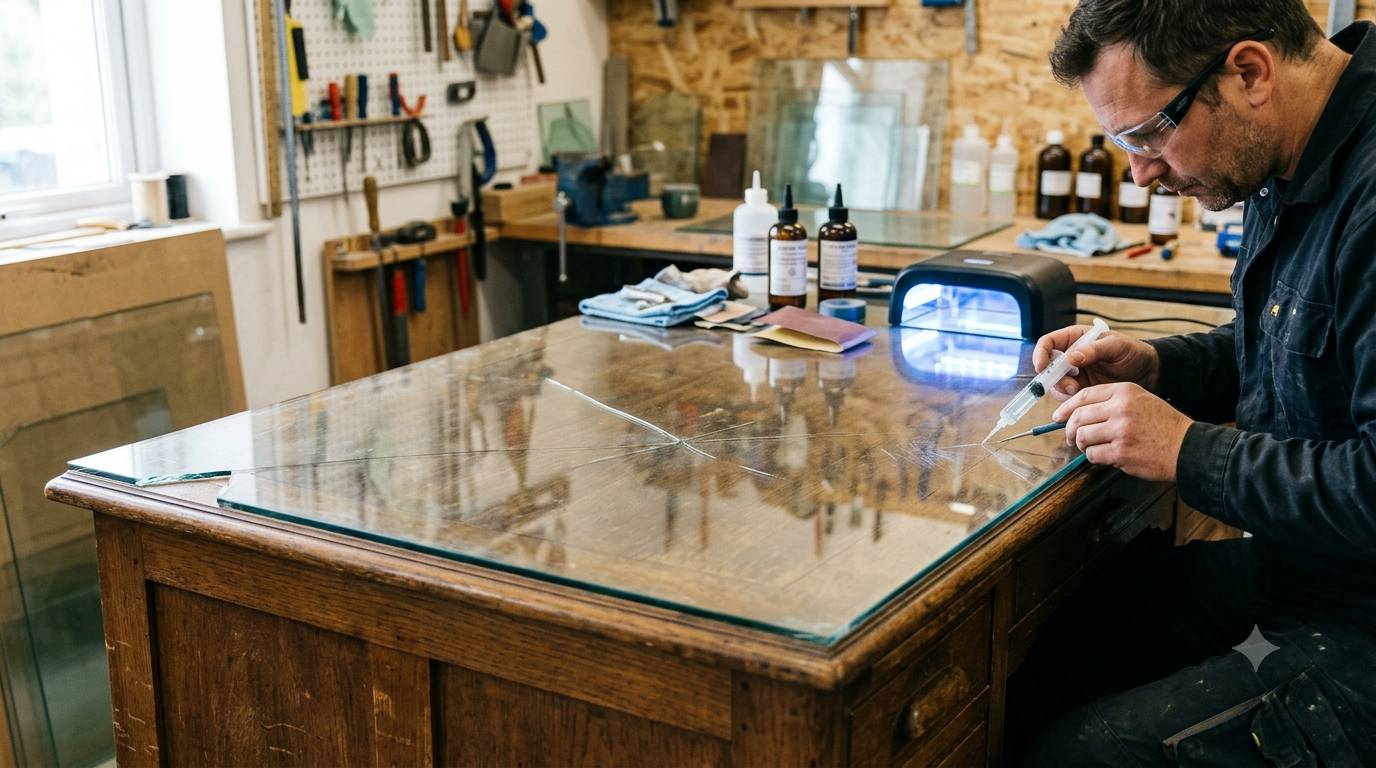
Check whether the damage is a surface scratch, edge chip, crack or complete break. Look for movement around brackets, supports and frames. A glass shelf that has shifted or a tabletop that rocks should not remain in use.
Do not apply household adhesive, resin or abrasive cleaner. These products can disguise damage temporarily, complicate professional assessment and create a false impression of strength.
Can Scratched Glass Be Saved?
Fine scratches are often cosmetic, particularly when they cannot be felt with a fingernail. The glass may remain usable, but its appearance will depend on the depth, position and lighting.
Deep scratches deserve more caution. They may have removed enough material to weaken the surface, especially when positioned near an edge, drilled hole or fixing. Attempting to polish them aggressively can distort the glass or create an uneven finish.
A glazier can assess whether the panel should remain in place or be replaced. If replacement is advised, accurate measurements allow a new tabletop, shelf or mirrored panel to be produced for the existing setting.
When Does a Chip Require Replacement?
A very small surface chip may appear harmless, yet its position is often more important than its size. Edge damage is a particular concern because glass panels experience stress around their perimeter. Chips near shelf brackets, tabletop supports or fixing holes should be inspected promptly. Continued weight, impact or temperature changes may cause the damaged area to spread.
Polished edges on replacement glass provide a smooth, professionally finished surface. Where safety and strength are important, a specialist can recommend toughened glass made to the correct dimensions and intended use.
Can Cracked Glass Be Repaired Safely?
A crack is a structural fault rather than a simple visual blemish. It can travel across the panel without warning, particularly when the glass is moved, loaded or exposed to changing temperatures. For this reason, cracked table tops and shelves generally require replacement rather than cosmetic filling. Stop using the furniture and avoid lifting the glass unless you have been advised how to handle it safely.
With professional mirror repair, glass table & shelf repairs, replacing the damaged panel does not necessarily mean losing the whole item. Frames, bases, brackets and other sound components may be preserved while bespoke glass is manufactured to fit.
What Parts of a Damaged Mirror Can Be Retained?
A cracked mirror surface cannot usually be restored to its original seamless condition. However, the surrounding frame, backing and mounting arrangement may still be reusable if they remain secure and undamaged. A replacement mirror can be measured and manufactured to suit the existing frame or installation. This is particularly useful for unusually shaped mirrors, fitted wall panels and coordinated interiors.
Dark spots, blackened edges and loss of reflective coating are different from cracks. Their extent and cause should be assessed before deciding whether replacement is worthwhile.
Why Accurate Measurement and Glass Choice Matter
Bespoke furniture glass must match the required length, width, thickness and shape. Cut-outs, curves, fixing holes and edge finishes must also be recorded accurately. The intended application influences the glass specification. A decorative mirror, load-bearing shelf and frequently used table top have different requirements. Toughened glass with polished edges may be appropriate for tables and shelving, but the final choice should follow professional assessment.
Correct installation matters just as much as accurate manufacturing. Supports must be stable, fittings must suit the glass and weight must be distributed safely.
Conclusion
The possibility of saving glass furniture depends on what “saving” means. A faint surface scratch may not affect normal use, but a deep mark, edge chip or crack can compromise safety. Cracked shelves and table tops usually need new glass, while their sound frames, supports or bases may remain perfectly usable. Damaged mirrors can also be replaced within existing frames or fitted spaces. Avoid testing weakened glass, applying makeshift fillers or continuing to load a damaged shelf. Secure the area, note the location of the defect and request an expert assessment. Precise measurement and an appropriate glass specification are essential for a safe, neat result.
Professional mirror repair, glass table & shelf repairs can establish which components are worth keeping and where replacement is the responsible choice. Acting early protects people, limits further damage and allows well-made furniture to remain useful without compromising its appearance or structural safety.